
Resource
How Our Bodies Protect Us
Unpacking Fight, Flight, Freeze, and Fawn
In impossible situations, our bodies and brains try to do what’s best to keep us safe, and this may not look the way you expected.
As a professional advocate, I have spent the last 5 years supporting survivors of sexual assault. I do this work because I believe that healing is possible. While healing has looked different for every survivor I’ve met, understanding how our bodies and brains respond to trauma can be a major part of that journey.
In my work, I have often heard survivors of sexual assault express guilt and self-blame. They often question why they did not fight back or say something to stop what was happening. If these are questions that you have asked yourself, I want to start off by saying that what happened was not your fault.
How Our Bodies Protect Us: Fight, Flight, Freeze, Fawn
You may have heard about the Fight or Flight response. These are two possible reactions that our bodies may have in response to distress. A fight response may look like physically defending yourself, pushing someone away, or yelling. A flight response may look like trying to escape a situation by running away or working to find an exit path.
While Fight and Flight are more commonly named and understood, there are two more responses that our brains and bodies may have. They are called Freeze and Fawn. Though they are often overlooked, Fawn and Freeze are surprisingly common trauma responses. This is what they can look like:
Freeze: This may look like the inability to move or speak. Sometimes people experience dissociation, which can feel like being disconnected from your body or “checking out.”
Fawn: This may look like trying to appease a perpetrator to minimize the harm they are causing you. For example, a person may attempt to calm someone who is causing them harm by complimenting them or going along with things they do not want to do, in order to avoid more harm.
These are all automatic responses that our bodies use to protect us in harmful situations. We do not get to choose which response we have. Many people experience freezing in cases of sexual violence, while a fawn response often surfaces for survivors of intimate partner violence or child sexual abuse.
Freeze and Fawn Do Not Equal Consent.
A common thought that survivors have is, “I didn’t say no, so it is my fault.” This is a common societal misconception about consent. So, let’s talk about it.
The absence of a “no” is not consent.
Silence is not consent.
Saying “yes” because it would be dangerous to say “no” is not consent.
Consent is an enthusiastic and clear “yes.” Consent is something that you can change your mind about at any point during sex or intimacy (or anything, really). Consent is something that we can only really give when we are sober.
As someone who works with survivors and often sees confusion over this topic, I love the work of Cheryl M. Bradshaw, a psychotherapist who studies sex and consent using the acronym, H.O.T.S.P.I.C.E. to describe the aspects that should be present when giving consent.
H - Honest: Each person is able to think about and express what they do or do not want.
O - Ongoing: Consent is discussed throughout the interaction.
T - Talked About: Consent is a verbal conversation.
S - Specific: Each person knows what they are and are not consenting to.
P - Present: Consent happens in the moment of the interaction.
I - Informed: Each person knows and understands the risk involved.
C - Changeable: Each person is free to change their mind at any point for any reason.
E - Enthusiastic Affirmative Consent: Consent is not hesitant or withdrawn. It is clear, enthusiastic, and affirmative.
In working with students and survivors, I have noticed that the "Ongoing" and "Changeable" aspects of consent have brought up the most questions. Sometimes people believe that once they say yes to something they cannot change their minds, but consent is something that you can take back at any time. Another aspect that is sometimes overlooked is that consent should be talked about. Without discussing consent it's impossible to confirm that the other aspects of consent are there. Again, consent is not simply the absence of a “no.” It is the presence of an enthusiastic, informed, and ongoing “yes.”
How Our Bodies Respond After Trauma.
Sexual violence often distorts the body’s sense of what is safe, and what is dangerous. After experiencing sexual violence, our bodies’ effort to protect us does not always end when the immediate danger is gone. It is common for survivors to experience fight, flight, freeze, or fawn responses even when we are in safe situations.
This may look like being easily startled by noises or smells. You may want to avoid people or places that remind you of the trauma you experienced. Some survivors experience flashbacks or feel like they are back in the dangerous situation they survived.
These are more ways that your body is trying to protect you from being harmed again. While it is a perfectly natural and even logical response to what happened in the past, it can be difficult to trust the world around us and feel a sense of safety anywhere when we are always on edge.
What Happens Next?
It is normal to feel angry, frustrated, sad, or hopeless after sexual trauma. It is normal to feel confused about how your body responded in that moment or how it continues to respond. Understanding why our bodies respond this way can be the first step to healing.
Fight, flight, freeze, and fawn are involuntary responses that your body engages to protect you, and to help you survive terrible violence. It is my hope that this knowledge may help you feel more comfortable to give yourself space and compassion. It is important to know that the next steps towards healing are your choice.
Here are some ideas to get you started.
1. RECONNECT TO YOUR BODY IN WAYS THAT FEEL SAFE
Yoga, mindful meditation, or breathing exercises could be a good way to reconnect to your body. One of my favorite ways to reconnect to my body is through a body scan meditation which allows me to notice sensations in my body without judgement or expectations. I really love this body scan meditation by Yoga with Adrienne.
Riss Myung also has a really great Guided Somatic Rest Session here on Braver Collective.
Remember that we are all different and what works for one of us does not work for everyone. I encourage you to try different ways to connect with your body to find what feels best for you. Other practices could be physical movement, self massage, or having a mindful self care routine.
2. PRACTICE SELF-COMPASSION
Compassion towards others looks like kindness, empathy, and understanding. Self-Compassion looks like giving that kindness, empathy and understanding to ourselves. Self-compassion can actually soothe our brains and bodies when we feel threatened. It can be so difficult to give ourselves compassion, especially if we have been critical of ourselves for a while, and it can be worth practicing self-compassion in our daily lives (Centre for Clinical Interventions). If you need ideas to get you started, Kristin Neff has some great practices to get you started on her site. I particularly like the Self Compassion Break because it is a simple exercise that I can practice anytime I need to.
3. FIND SUPPORT THROUGH COMMUNITY
Being around people who support you and believe you can be incredibly healing. This could be your family, friends, or even a local or online support group.
- Braver Collective Hotline List
- Rape Crisis Center Directory
- The National Sexual Violence Resource Center also has a directory of organizations that support survivors all over the United States.
For survivors who wish to share their own experiences in community with other survivors, Hidden Water offers Healing Circles for survivors, perpetrators, parents of survivors, and loved ones of survivors.
4. REACH OUT TO A TRAUMA-INFORMED THERAPIST FOR SUPPORT
A good trauma-informed therapist can support you on your journey to healing. There are a few different types of trauma therapy, so it is important to find a therapist that feels right for you. Here are some resources to help you get started.
You Don’t Have to Go Back to Who You Were Before.
In my work with survivors, I have noticed something that is not often talked about when we think about healing journeys. Sometimes survivors start this journey with the hope that they will return to who they were before trauma. If this is something that you are hoping for, I want to share something that can be difficult but important to know.
Going back to exactly who you were before may not be possible. I know that this can be a difficult thing to hear and can cause feelings of grief and loss. I want to be clear that this does not mean that healing is not possible, but it may look different than you imagined. This is normal, and this is okay.
Surviving trauma can change how we show up and navigate through the world. We may notice changes in how we interact with others or how we think. Our bodies and minds are trying to make sense of our experience and trying to find a way forward.
You do not have to let go of all that you were before. Your values, your kindness, your interests—the parts of you that you hold dear can still be there, even as other parts may change. You also do not have to force yourself to be exactly who you were before. That is a lot of pressure and can make healing difficult. Try to give yourself space and compassion for who you are right now and who you are becoming on your journey towards healing.
It’s Not Your Fault.
What happened to you is not your fault. Your body did the best it could to keep you safe in a terrible situation.
We do not get to choose how our bodies respond to trauma, but we do get to choose what we do next and when we are ready to take steps towards healing. This healing can take time and looks different for everyone.
Your body helped you to survive and now you deserve healing and safety.
If you would like to find support in your community, please consider reaching out to a local sexual assault service organization or a campus advocate.
You are not alone.
RESOURCE DISCLAIMER
Resource articles are researched and written by experts and advocates in the field of survivor support. Every survivor’s journey is different. Braver Collective does not endorse, approve, or recommend any specific path or modality towards healing. All content on this page (written, visual, linked) is for educational purposes only, and is not intended to replace or provide medical, legal, or any professional advice or care. Always consult a qualified healthcare professional for any health-related questions, concerns, or conditions. If you are experiencing a medical emergency, dial 911 or go to the closest emergency room.
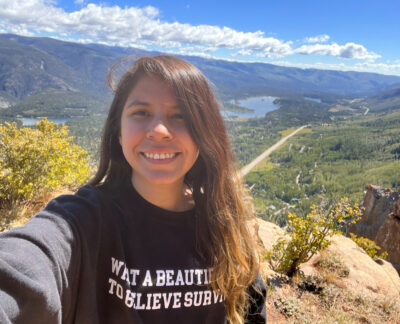
- Victoria Barclay, M.S., she/her/ella
Victoria is a trauma-informed advocate and case manager at Fort Lewis College's Counseling Center, where she works alongside students navigating some of their hardest moments. With an M.S. in Applied Clinical Psychology and a background in community mental health and trauma-focused care, she is grateful to do this work every day. She also serves on the Sexual Assault Services Organization in Durango. When she's not at the Fort, you'll find her hiking, chasing good light with a camera, or dancing — with her partner Eli and their pets by her side.