
Insight
Shattering the Silence
“When I was 15 years old, a male middle school teacher in my hometown of Goldsboro, NC, raped me.”
This is my starting sentence when I speak — no hello, no good morning or afternoon — I want to grab the audience’s attention. It does the job pretty well. I want the audience to know how serious rape is, how one event can significantly change, or even destroy, a life.
Yes, he raped me.
We often soften it by saying sexual assault. It’s a broad term that encompasses a wide range of disciplines and actions. Still, no matter how sterile the language becomes, it doesn’t make what happened any less violent. I use the word rape because there’s no mistaking it. No confusion. No space to downplay or distort. You hear it, and you know exactly what he did to me.
Rape is a nasty, four-letter word. Rape is chaos. Rape is pain. Rape is humiliating. Rape strips you of your humanity in ways that can feel almost impossible to reclaim.
That’s where my story begins.
For years, I listened to the stories of other survivors. I noticed patterns, common threads, missing pieces, memories blurred or blocked by the brain’s desperate need to protect the body. Most survivors don’t remember everything; their minds shield them from the worst of it.
But my attack was the exact opposite.
I remember everything.
Every second.
Every thrust.
Every groan.
Every moment of pain tearing through my body.
I couldn’t tell you how long it lasted. All I know is that I wanted it to stop. I wanted it to end.
People talk about “fight or flight.” But there’s a third response: freeze. Think of it like a deer in headlights, that instant when your body knows you’re not going to win and you’re not getting away. It shuts down.
That’s what happened to me.
My body froze. But my mind stayed painfully awake. I remember his weight, his breath, the panic clawing its way through my chest. I wasn’t a big kid. I didn’t know if he had a weapon. I didn’t know how far he would go. I let him do what he wanted because maybe, just maybe, if I didn’t fight, I’d survive. I would get out of this horrible situation alive.
You never really know how far a predator will go to get what they want. Mine waited a full year. He groomed, he planned, and when he finally acted, he did exactly what he intended.
This man, who was my friend, my mentor, the father I didn’t have but desperately needed.
But what I don’t remember… is how I got home.
I walked out onto his porch. I got on my bike. He didn’t say a word. And the next thing I knew, I was back home. Ten, maybe fifteen minutes of my life are completely gone. Silent. Blank. Nothing but shock.
After that day, I withdrew even further into my shell. I’d always been a quiet, introverted kid, but now I felt like I was fading from the world. I didn’t want to be seen. I didn’t want to take up space. I wanted to disappear.
And then, a few days later, a letter arrived. A real letter, folded paper in an envelope with a stamp. It was an “apology” from him, only it never mentioned what happened. Just vague regret, enough to prove he knew precisely what he did.
I read it once. Then I threw it away.
Later, my mom found it in the trash. She asked me, “Aaron… did he touch you in any way?” And I lied. I told her we’d just argued. Because that’s what boys are taught to do: keep their mouths shut. Be strong. “Real men” don’t cry. They don’t break.
She let it go. Well, so I thought. And I buried it as much as I could.
I graduated from high school. I had been accepted to NC A&T University; I was supposed to be on my way to becoming an Army nurse. But instead, I enlisted. Four years became twenty-seven. I became a combat medic. And I was good at it. I kept my personal and professional lives in separate worlds, sealed off from each other like locked compartments.
Nobody knew.
In the late 1990s, seeking help for behavioral health in the military was seen as a weakness. If you saw a counselor, you were broken, the weak link, a detriment to the force. I refused to wear that label. I didn’t turn to alcohol or drugs. I turned to something else.
Cutting.
My upper arms, my thighs, the places my uniform always covered. The parts no one would ever see. At night, in my barracks room, I was still that fifteen-year-old kid. Curled up. Crying and trying to make sense of a life that didn’t feel like mine anymore.
Pain gave me some sense of control over my body; a power he still held over me even after years had passed. Shame was my motivator.
Still, I put on the uniform every morning, and I was the perfect soldier. Competent. Controlled. Untouchable. No one suspected a thing.
My unit was one of the first to roll into Iraq in 2003, and for the first time in years, the constant noise inside me quieted. War distracted me from my trauma. It shouldn’t have, but it did. As a medic, combat forced my focus outward.
I held dying soldiers in my arms. Saw the absolute worst in humanity… and somehow the very best, simultaneously in the same situations. My world was in chaos, but I knew my purpose in it.
Eventually, the Army started talking more about PTSD. Counseling became “acceptable,” at least on paper. But not for me. I still believed that if I couldn’t protect myself at fifteen, I had no business protecting the people I was supposed to lead.
I stayed silent until I couldn’t.
It was January 2010. I was driving when something, a sound, a smell, a memory, slammed into me from nowhere. It cracked open a part of me I’d kept sealed for decades. I had to pull over. I was shaking. Crying. I couldn’t breathe. I needed help.
The next day, I was in an inpatient behavioral health facility. And for the first time in my entire life, I told my story to a room full of strangers.
That was the beginning of healing. I took my first step that day, and the weight of the world finally fell off my shoulders.
A few months after I finished therapy, something in me got curious. I researched the statute of limitations on statutory rape in North Carolina. It turned out that there weren’t any, but all I had was my word… against a respected teacher who attacked, assaulted, and raped me over 17 years prior.
Still, I had to try.
I called the Goldsboro police, told them what happened, and they asked me to come up to give them a written statement.
I took leave, drove to North Carolina, and walked into that police station carrying nothing but memory and truth. I gave them everything I had. Showed them where he lived. And get this, he was still living just half a mile from the school he used to teach at.
Every day, kids walked right past the house of a man who had raped a child. They took my statement and said they’d be in touch.
I didn’t expect anything to happen. I really didn’t. No evidence. No witnesses. Just me. My word against his.
But for the first time in years, I finally felt at peace. Because I had finally done something - it wasn’t much, but it was enough for me. Less than a week later, my phone rang. They had arrested him.
My perpetrator was sitting in a county jail under a half-million-dollar bond, charged with statutory rape and sexual offenses against a minor. During the investigation, they spoke to a former superintendent who had access to his teaching files, and in one of those files was the letter he wrote to me back in 1992. The date on that letter correlated with the exact date I gave in my statement.
And here’s what I never knew:
After my mom found that letter, she went straight to the school board with it. The letter didn’t say anything explicit, but it was evident that something wasn’t right, that something inappropriate was happening between not only an adult and a child, but a teacher and a student.
The board gave him two choices: Get fired publicly… or retire quietly. He chose the latter; he chose silence.
And I had no idea. My mom never told me.
But now, my statement and dates lined up with that letter. That was enough to arrest and charge him.
This is the face of the man who hurt me. And for the first time, I knew he couldn’t hurt anyone else.
But then, I made the mistake of reading the comments in the news reports.
“Why’d they wait 17 years?”
“If it were me, I would’ve fought back.”
And the news didn’t even say it was a male survivor; it simply said a “former student.”
Most people assumed it was a woman because that’s how society sees survivors.
But here’s the truth: No one knows what they’d do until it happens to them. I used to say the same things, but pain humbles you.
As I prepared for trial, I began to build the courage to go public, to finally put my name and face out there. He pleaded out before it got that far; he took a lesser sentence. Even though it never went to court, I still knew I had done my part.
Because now, he couldn’t hurt my daughter. He couldn’t rape, assault, or molest any child or any of mine or your family members.
When most people hear the term sexual assault survivor, an image comes to mind. For many, that image is a woman, but the reality we never talk about is that men are survivors, too.
They are our fathers, our sons, our friends, our battle buddies.
They serve in our military, they work in our offices, they play on our sports teams.
They suffer in silence for years, sometimes decades, because shame forces them to stay hidden, as it did me for so long. Just like female survivors, sexual assault can be physically, emotionally, and psychologically damaging, the impact unfathomable.
The silence around male sexual assault feeds into myths that keep survivors hidden.
The most common of these myths is that men can’t be sexually assaulted. They can be, and they are. Sexual assaults happen across all sexual orientations, ages, and backgrounds. The idea that it’s “something that only happens to women” is false and dangerous.
When we fail to challenge these myths, we allow shame to grow. And shame is one of the biggest silencers there is. Society tells men they should be able to “fight off” an attack. If they couldn’t, they might feel like they failed as a man. If they couldn’t protect themselves, how can they protect their families or those under their charge?
Most male survivors worry that no one will believe them because “men cannot be raped.” They don’t want to be seen as weak. In a culture that prizes toughness, admitting vulnerability feels dangerous.
These barriers don’t just keep men silent. They keep them isolated. Male survivors face the same emotional wreckage as any other rape survivor.
Support begins with listening, believing, and education. Learn about the realities of male sexual assault so you can respond with understanding, not judgment. Something as simple as asking “How can I support you right now?” is more potent than “Here’s what you should do,” or “Here’s what you should have done.”
Some survivors need time before sharing details. If you are supporting a survivor, respect their pace, because healing is not linear. It took me over 17 years to finally seek help.
Sexual assault is a complex topic, but we need to stop treating it like it’s taboo. We need to talk about it openly with compassion and courage. We need to do it together.
The conversations will be uncomfortable, which means talking openly about healthy relationships, calling out jokes or comments that make light of sexual violence, and ensuring survivors know they are not alone, and that their stories matter.
The more we normalize these conversations, the harder it becomes for predators to hide, and the easier it becomes for survivors to heal. Male sexual assault isn’t rare; it’s just rarely talked about.
Silence is where shame grows, but every time we learn the truth, every time we speak up, every time we listen without judgment, then we chip away at that silence.
To every survivor, regardless of gender, your story matters. You matter.
If you’re reading this and feel something inside you moving, take this as your invitation. Choose one safe action today. It doesn’t have to be a big leap or a public confession. Just take one step toward hope.
- Tell someone you trust, “I’m not okay, and I could use someone in my corner.”
- Write down a sentence you’ve never let yourself say: “What happened to me mattered.”
- Call a counselor, advocate, or crisis line and say, “I need help figuring out what healing could look like.”
- Make a safety plan. Write down a name, a number, or a place to go if things feel too heavy.
If you care about someone who is a survivor, here’s your invitation: be a steady place for them. Believe what they share. Stay calm. Don’t rush their process. Ask, “What would feel supportive right now?”
There is a future for you beyond this pain. You don’t have to earn the right to reach for it. All you need is the willingness to take one small step.
INSIGHT DISCLAIMER
Insight articles are written by survivors sharing their own first-hand healing knowledge and lived experience. These are personal perspectives featuring survivor-to-survivor wisdom, advice, and offering firsthand accounts of navigating the challenges/realities faced by survivors. Every survivor’s journey is different. Braver Collective does not endorse, approve, or recommend any specific path or modality towards healing. All content on this page (written, visual, linked) is for educational purposes only, and is not intended to replace or provide medical, legal, or any professional advice or care. Always consult a qualified healthcare professional for any health-related questions, concerns, or conditions. If you are experiencing a medical emergency, dial 911 or go to the closest emergency room.
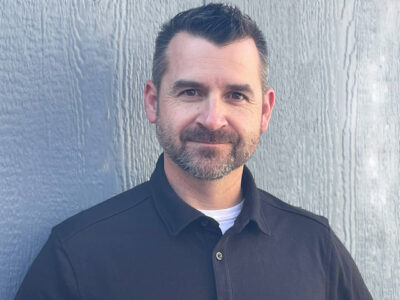
- Aaron Stone
Aaron Stone, retired U.S. Army Combat Medic, served 27 years with multiple tours in Iraq, Afghanistan, and Bosnia. But his deepest battle began at 15, when a male teacher groomed and attacked him. For nearly twenty years, he lived in silence, struggling with shame, depression, and PTSD. Speaking out became his turning point.
Now, Aaron shares his story with military audiences, universities, and communities nationwide, challenging toxic beliefs, inspiring survivors to reclaim their voices, and reminding them they are never alone, it’s never their fault, and help is always within reach.